The story of Ojos Grandes and el Señor de mis Sueños has deep roots in my childhood. The character of the Lord of My Dreams was born in my imagination when I was eight years old. To me, he was as real as the people around me; a companion who accompanied me and spoke to me every day.
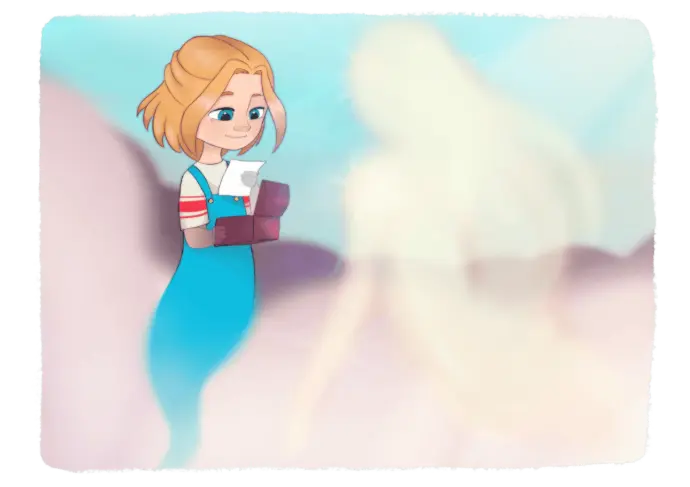
As I grew up, I wondered: can anything from the imagination be as real as life itself? That question led me to write down everything I remembered about that character and my dreams about him. That is how the first manuscript that would give rise to my Ojos Grandes collection was born.
When my daughters began to take an interest in stories, I decided to submit the manuscript to a public competition. The surprise was enormous: Ojos Grandes y el Señor de mis Sueños won! Thus, an imaginary world that had lived quietly for years began to spark the imagination of other children.
🧠 Imaginary friends according to psychology

You may have heard that children with imaginary friends are “loners”. Science says otherwise.
Key facts:
- Many children create imaginary companions between the ages of 3 and 8; this is normal and healthy. (ParentTrust)
- Imaginary friends encourage creativity, empathy, and social skills. (CreativeChild)
- Talking to an invisible friend helps practise language, emotional understanding, and conflict resolution. (ScienceDaily)
- They also offer emotional support and comfort, helping the child process feelings and fears. (BMC Psychiatry)
Myths vs reality:
 “Having imaginary friends is a sign of loneliness.” → Most children with imaginary friends are socially active.
- “Children cannot distinguish between fantasy and reality.” → Most recognise that their imaginary friends do not physically exist. (GreaterGood Berkeley)
✨ How to support a child with an imaginary friend
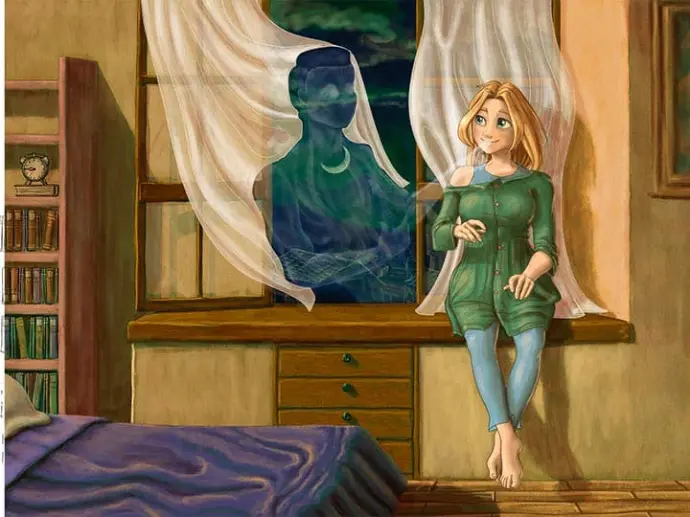
Accompanying a child with an imaginary friend is not about controlling them, but rather offering support and guidance.
 Listen without judging
Allow the child to talk about their friend and tell stories. Questions such as:
What a fun adventure! What did your friend do today?
validate their inner world and strengthen communication.
 Encourages creativity
Drawing, writing, role-playing: all these activities help develop language, imagination and social skills.
 It integrates fantasy and reality in a healthy way.
If imagination interferes with routine, help them differentiate between play and reality, without diminishing the value of their inner world.
 Watch for warning signs
Intense anxiety, prolonged isolation, or relationship problems may require professional counselling.
 Celebrate imagination
Recognising and valuing their creative world strengthens self-esteem, empathy and emotional security.
 Why imaginary friends are a gift
Far from being a sign of loneliness, an imaginary friend is a tool for growth:
- Develop creativity and divergent thinking.
- Improves empathy and understanding of emotions.
- It allows you to experiment and practise social relationships.
- It offers comfort and a safe space to explore emotions.
In my case, the Lord of My Dreams not only accompanied me throughout my childhood: he inspired me to create Ojos Grandes y el Señor de mis Sueños (Big Eyes and the Lord of My Dreams), a book that celebrates imagination, dreams, and children's ability to create worlds full of adventure and excitement.
 Join in and share your imagination!
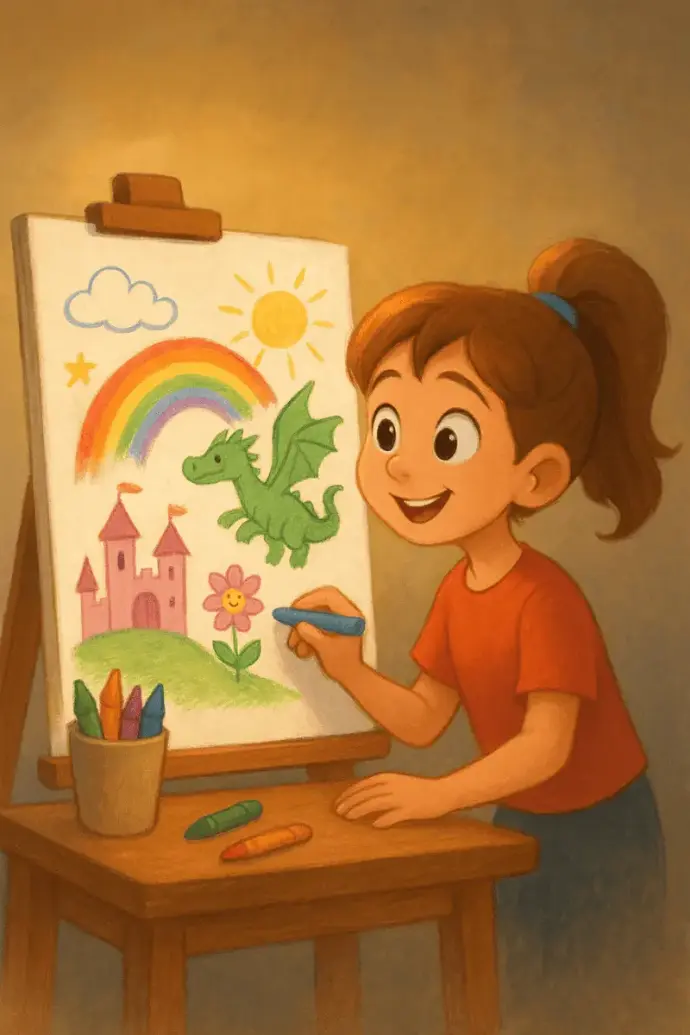
Great stories have personality. Consider telling a great story full of personality. Writing a story with personality for potential customers will help you maintain relationships and connections. Use words or phrases that demonstrate this, and remember to write from your point of view, not from someone else's experience.
Great stories are for everyone, even if they were written for just one person. If you try to write with a broad, general audience in mind, your story will sound false and won't be exciting. No one will be interested. Write for one person. If it's genuine for one person, it will be for everyone else.