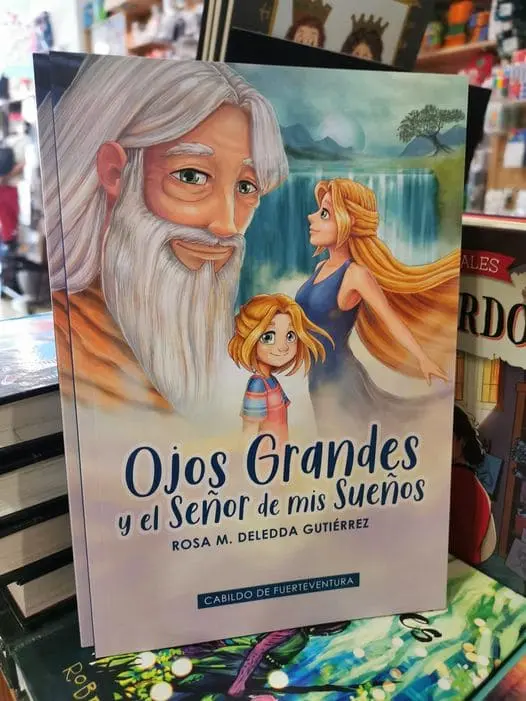
The story of Ojos Grandes y el Señor de mis Sueños has very ancient roots in my own life. The character of the Lord of My Dreams was born in my imagination when I was just eight years old. For me, he was as real as the people around me; he was not just a game or a passing thought, but a being with his own presence, who accompanied me and spoke to me in my days and nights.
As time passed and I became an adult, a big question arose in my mind: What does it mean for something to exist only in the imagination? Can it be as real as everyday life? That reflection led me to write down everything I remembered about that character and my dreams about him. Little by little, the first manuscript that would give rise to the book emerged, and with it, the first story in my Ojos Grandes collection.
Although the book was conceived long before my daughters were born, seeing their interest and excitement for the stories encouraged me to take a step that I had not dared to take until then: sending the manuscript to a competition organised by a public institution. I was utterly surprised when they notified me that I had won. It was a moment that confirmed that the imaginary world I had lived in silence for so many years could indeed touch other children and spark their imagination.
And what does psychology say about imaginary friends?
You may have heard it said—or even thought it yourself—that children who create imaginary characters are “loners”. But science today tells us otherwise:
- Having an ‘imaginary friend’ is very common: many children experience this between the ages of 3 and 8, and often this figure disappears when they begin to interact with other children. psicologia.laguia2000.com+2Healthline+2
- Beyond being associated with loneliness, imaginary friends are linked to creativity, emotional intelligence, and social development. According to studies, children with imaginary companions tend to develop a greater understanding of others' emotions, better creativity, more empathy, and better social skills. Healthline+2SpringerLink+2
- For many children—especially those who may feel lonely, are only children, or are going through changes—these imaginary friends represent a way to process emotions, rehearse relationships, express fears or desires, and even organise their thoughts. Faro de Vigo+2Consumer |+2
Therefore, far from being a sign of weakness or loneliness, having an imaginary friend can be a manifestation of sensitivity, a rich inner world, and a capacity for wonder. In my case, el Señor de mis Sueños was that voice, that refuge, that universe of fantasy that accompanied me, comforted me, and inspired me.
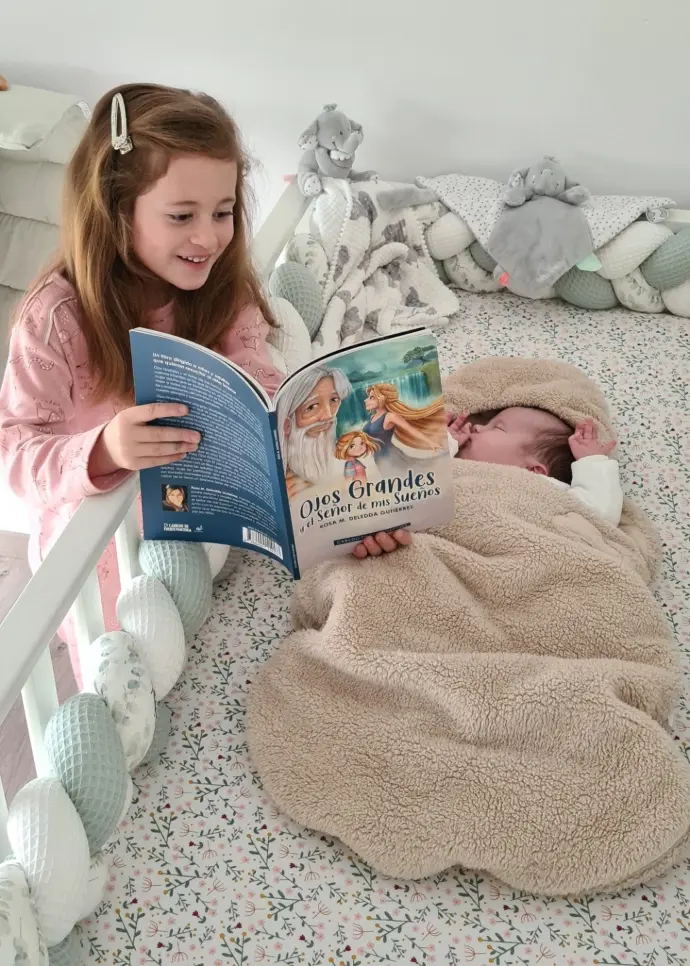
Every character and every scene in Ojos Grandes and el Señor de mis Sueños holds a little piece of my childhood and that curiosity about what is real and what is born of the imagination. And today, when I see children enjoying the book, drawing the characters or creating their own stories, I feel that every word written and every illustration carefully thought out was worth it.
I invite you to enter this world too: have you ever felt that an imaginary character was as real as your friends or family? What do you think it would be like to meet the Lord of my Dreams? Leave me your comment, your drawing or your story: I would love to discover all the universes that are born from the imagination, together.